
Building Business Value and Personal Wealth Through Coordinated Financial Planning

You can grow your business while building personal wealth by treating your company as a financial asset and making business decisions that support your personal financial goals. That means evaluating expansion, financing, reinvestment, and succession decisions alongside your family’s needs, investment strategy, retirement plans, and long-term priorities. With the right professionals helping manage and grow the company, your business can become an increasingly valuable asset that provides financial security, creates opportunities for generosity, and leaves a meaningful legacy.
At Catalano Financial, an independent Registered Investment Adviser in The Woodlands, Texas, we believe that successful business ownership involves more than increasing revenue or profitability. A business should help its owner build the life they want to live. The challenge is making sure that the decisions driving business growth also support that larger purpose.
Founder Peter Catalano, ChFC®, CLU®, has worked in financial services since 1992 and has helped many business owners evaluate major decisions through the lens of their personal finances. Whether an owner is considering borrowing money, expanding operations, purchasing another company, or preparing for retirement, the discussion often begins with a question that reaches beyond the business itself: Will this decision bring you closer to fulfilling your core personal values?
Why Should Business Owners Treat Their Company as a Financial Asset?
For many entrepreneurs, the business they have spent years building represents their largest financial asset. It generates income, provides employment, supports their families, and may eventually become the foundation of their retirement or financial legacy. Yet business owners sometimes evaluate the company primarily through revenue, profitability, and daily operations without considering how its value fits into their overall personal financial picture.
A profitable company and a financially secure owner are not necessarily the same thing. An owner may have substantial equity in the business but limited investments outside it, insufficient personal liquidity, or significant exposure to business debt. Even a successful company can create financial vulnerability when too much of the owner’s wealth depends on one asset.
This is why we encourage business owners to consider the company as part of a consolidated financial picture that includes personal investments, retirement accounts, real estate, insurance, liabilities, and family obligations. Each of these elements affects the owner’s ability to make decisions, withstand unexpected events, and eventually transition away from active business ownership.
I’ve helped many business owners evaluate major decisions by first understanding their personal financial circumstances. An expansion or acquisition might look attractive from a business standpoint, but I want to know what it means for the owner’s family, retirement, and financial security. Most importantly, I want to know whether that decision brings them closer to living out their values.
— Peter Catalano, ChFC®, CLU®, Founder, Catalano Financial
Should I Reinvest Business Profits or Build Wealth Outside My Company?
Reinvesting profits can be an effective way to grow a business, particularly when additional capital allows the company to increase capacity, improve operations, hire employees, or pursue new opportunities. However, retaining every available dollar inside the company can also leave the owner with limited personal investments and a financial future that depends heavily on the continued success of the business.
The appropriate balance depends on the company’s financial condition and the owner’s circumstances. A younger entrepreneur pursuing a carefully evaluated expansion may have different priorities from an owner approaching retirement who needs to reduce financial concentration and build dependable sources of personal income.
Rather than viewing business reinvestment and personal wealth accumulation as competing goals, we believe they should be coordinated. The objective is to determine how much capital the company reasonably needs for growth while establishing a strategy for building financial resources outside the business.
| Financial decision | Potential business benefit | Personal financial consideration |
|---|---|---|
| Reinvest profits | Supports growth, equipment, staffing, and operations | Reduces funds available for personal investing and diversification |
| Borrow for expansion | Provides access to capital for growth opportunities | Creates repayment obligations and may involve personal guarantees |
| Acquire another business | May increase market share, capabilities, or profitability | Adds complexity and may concentrate more wealth in the company |
| Distribute profits | Reduces capital retained in the business | Creates opportunities for personal savings, investing, and debt reduction |
| Prepare for succession | Strengthens continuity and potential transferable value | Supports retirement, family ownership, or an eventual sale |
These decisions become more meaningful when viewed through a comprehensive financial plan. At Catalano Financial, our Financial Roadmap Meeting helps owners clarify their values and goals before evaluating how their financial resources should be used.
Can Borrowing Money Help Grow My Business and Increase Its Value?
Business financing can support growth when the borrowed capital is used productively and the company can reasonably manage the resulting obligations. Owners may need financing to purchase equipment, acquire commercial property, increase working capital, or complete a business acquisition. In the right circumstances, access to capital can allow a company to pursue opportunities that would otherwise be difficult to fund.
However, the availability of financing does not necessarily mean borrowing is the best decision. Interest costs, repayment schedules, collateral requirements, and personal guarantees can affect both the business and the owner’s personal financial security. Before accepting additional debt, owners should consider how the proposed investment is expected to improve the company and whether the potential benefits justify the additional risk.
Evaluating Business Financing With Sean Hasson of Hasson Capital

When business owners need to explore financing alternatives, Peter frequently refers them to Sean Hasson of Hasson Capital, a commercial lending brokerage that works with a variety of business financing situations.
Sean’s expertise helps business owners explore available lending structures and evaluate financing options for needs such as business expansion, working capital, commercial real estate, and acquisitions. Working with a lending specialist can be particularly useful when a transaction requires a financing approach that differs from a conventional bank loan.
At Catalano Financial, our role is complementary. While Sean addresses lending alternatives and requirements, we help the owner consider how additional borrowing fits into their broader financial circumstances. That includes examining liquidity, personal guarantees, retirement timelines, financial concentration, and the potential consequences if expected business growth takes longer than anticipated.
A business owner planning to operate for another 15 years may evaluate an expansion differently from someone preparing to sell within the next three years. The financing decision should reflect those differences rather than being evaluated solely on whether the company qualifies for a loan.
How Can I Increase the Value of My Business Before Selling or Passing It to Family?
Building business value involves much more than increasing sales. Potential buyers and successors may evaluate profitability, customer concentration, recurring revenue, management quality, financial reporting, operating systems, and the company’s ability to function without its current owner. A business that depends entirely on its founder may generate substantial income but still present challenges when ownership changes.
Owners who address these issues early can improve their company’s operational strength while creating more options for themselves. Stronger management, documented processes, and reliable financial information can help a business operate more effectively today and may also improve its attractiveness to future buyers or family successors.
Strengthening Business Operations and Leadership With Mike Rager
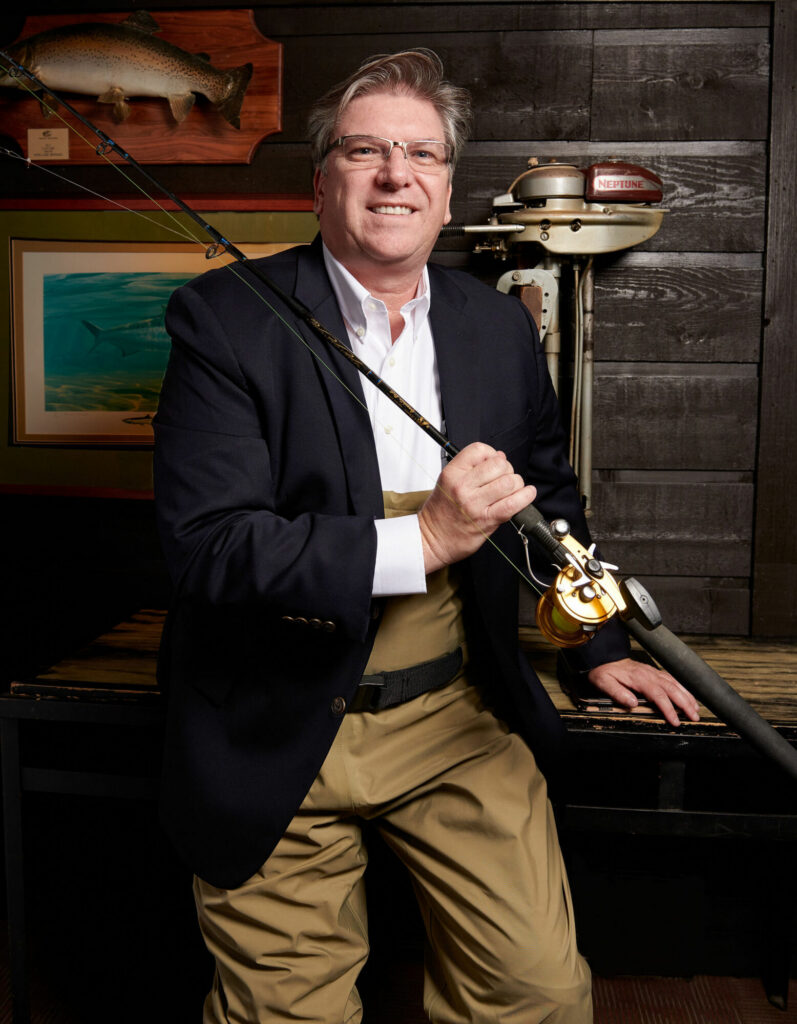
Michael Rager, a business coach and growth-focused advisor, is among the professionals Peter looks to when business owners need help strengthening how their companies operate. His perspective on business growth, leadership, and execution complements the financial planning work we do with owners. Learn more at Michael Rager.com
Business coaching can help entrepreneurs examine the operational decisions that influence profitability, management effectiveness, and the company’s dependence on its founder. These improvements matter because a business with capable leadership and established systems may offer greater flexibility to its owner and be better positioned for a future transition.
There is also an important personal benefit. When the business can operate effectively without requiring the owner’s attention to every decision, the owner may gain more freedom to spend time with family, pursue personal interests, or focus on other meaningful responsibilities.
We explore this idea in greater detail in our related article, Build Your Business to Sell. Even If You Never Do.Preparing a company for an eventual transfer is not simply an exit strategy; it can also be a practical approach to building a stronger business while the owner continues to operate it.
How Do Business Investments and Personal Wealth Management Work Together?
Business owners are constantly making decisions about how to allocate capital. Some investments occur inside the company through equipment purchases, hiring, technology, facilities, or acquisitions. Others occur outside the business through retirement accounts, diversified investment portfolios, real estate, and personal cash reserves.
These investments serve different purposes, but they ultimately contribute to the owner’s financial future. Business investments may increase operating capacity or enterprise value, while personal investments can provide liquidity, diversification, and financial resources that are not dependent on the company.
Evaluating Capital and Investment Decisions With Kristin Gunderson

Kristin Gunderson, an investment professional and fellow founder of The Talanton Collective, brings an investment-oriented perspective to conversations involving business ownership, capital allocation, and long-term value creation. Learn more about Kristin at Gundersons Tax and CFO Services.
Her expertise reinforces the importance of evaluating investments in relation to their expected benefits, associated risks, and the owner’s broader objectives. Whether an entrepreneur is considering a business acquisition or deciding how much wealth to retain outside the company, thoughtful capital allocation requires more than looking at potential returns.
At Catalano Financial, we coordinate investment management with the owner’s personal financial plan, including their need for liquidity, diversification, retirement income, and risk management. We also recognize that privately held businesses, commercial real estate, and operating investments often require specialized expertise beyond traditional portfolio management.
The objective is not to have every professional make the same decisions. It is to bring the appropriate expertise into the conversation so the owner’s financial resources are managed with a consistent purpose.
Why Is Coordinated Financial Planning Important for Business Owners?
As a company grows, financial decisions become increasingly connected. Borrowing to expand may affect the owner’s personal liabilities, while an acquisition can influence cash flow, tax planning, and retirement expectations. Bringing children into the business may introduce estate planning, ownership, and family governance considerations that require attention well before a formal succession occurs.
No single professional should be expected to provide every form of expertise involved in these decisions. Business owners may need guidance from lending specialists, business coaches, CPAs, attorneys, fractional CFOs, insurance professionals, investment specialists, and business valuation experts. Each professional addresses a different part of the company’s financial and operational picture.
At Catalano Financial, we help coordinate those conversations around the owner’s personal financial plan. Our responsibility is to understand the larger picture and help the owner evaluate how the recommendations of different professionals affect their financial security and long-term goals.
For example, consider an owner evaluating a $750,000 expansion. A lending broker may help structure the financing, while a business coach examines operational readiness and a CPA evaluates tax considerations. A financial advisor can help the owner consider whether the expansion creates an acceptable level of personal financial risk, affects retirement timing, or supports the family’s long-term priorities.
The expansion may ultimately be an excellent opportunity, but that conclusion should come from understanding its consequences for both the company and the individual who owns it.
I’ve worked in financial services since 1992, and I’ve learned that financial decisions become clearer when people understand what matters most to them. We are in business to live the life we want to live. The business is an asset that should help make that possible, and the professionals surrounding the owner should help protect, manage, and grow that asset with those goals in mind.
— Peter Catalano, ChFC®, CLU®, Founder, Catalano Financial
This is the foundation of our planning philosophy: Values → Goals → Money. We begin with what matters to the owner, identify the goals that support those values, and then coordinate the financial strategies needed to pursue them.
Through our financial planning services and Strategic Wealth Partnership, Catalano Financial helps clients evaluate complex decisions and coordinate with their independent professional advisors when appropriate.
Is Your Business Helping You Live Your Purpose and Give Joyfully?
A business can become more profitable and valuable without necessarily making its owner’s life more fulfilling. Some entrepreneurs discover that the company they built to create independence now requires so much of their time and attention that they have little freedom to enjoy what they have accomplished.
That is why we believe financial planning should address more than financial statements and investment accounts. Owners should consider whether the business is helping them care for their families, serve their communities, pursue meaningful work, and live according to their personal values.
For Peter, Christian faith is central to that perspective. He believes our abilities, opportunities, relationships, and financial resources should be used with purpose. Building a successful company can create opportunities to provide employment, serve customers, support charitable causes, and practice generosity in ways that reflect those convictions.
The Talanton Collective: Connecting Business Growth With Faith and Purpose
Peter’s involvement in The Talanton Collective reflects this broader view of business ownership. The Collective is a faith-based business ecosystem for entrepreneurs and professionals who desire to grow profitable businesses, lead with integrity, and create lasting Kingdom impact.
Its vision recognizes that profitability and purpose need not be competing priorities. A well-managed business can create the financial capacity to support employees, care for families, strengthen communities, and give generously. The challenge is ensuring that growth remains connected to those intentions rather than becoming an end in itself.
For Christian entrepreneurs, that raises an important question: Are you building the business God designed you to build, and is its growth helping you give joyfully?
Other business owners may express their values differently, but the underlying question remains relevant. What is the company ultimately meant to make possible, and are the decisions being made today bringing the owner closer to that purpose?
Financial success can provide freedom, but freedom becomes meaningful when it allows people to live according to what they value most.
How Do I Turn My Business Into a Lasting Financial Legacy?
Every business will eventually experience a transition, whether through retirement, sale, family succession, employee ownership, or an unexpected change in circumstances. The decisions made during the company’s growth years can have a substantial influence on the financial options available when that transition arrives.
An owner who has built substantial business value but limited personal investments may depend heavily on the timing and proceeds of a future sale. Another owner may wish to transfer the company to children but need a strategy that provides retirement income without placing excessive financial pressure on the next generation.
These situations illustrate why succession planning, personal wealth management, and business development should be coordinated well before the owner is ready to step away.
Our business-owner article series explores the transition process in greater detail, including Build Your Business to Sell. Even If You Never Do., Selling Your Business Is a Financial Decision, Not Just a Transaction., and After the Sale: From Proceeds to a Plan You Can Live With.
Together, these articles address an important reality: the financial value of a business is most meaningful when the owner has a plan for how that value will eventually support personal financial independence, family security, and a lasting legacy.
The objective is not necessarily to sell the company. It is to build an asset that provides choices, whether the owner continues operating it, transfers it to family, or eventually converts its value into other financial resources.
How Can Catalano Financial Help Me Grow My Business and Build Personal Wealth?
At Catalano Financial, we understand that a business owner’s financial life rarely fits into separate categories. Business equity, personal investments, retirement accounts, insurance, real estate, debt, and family responsibilities all influence one another, and decisions involving one area often affect several others.
Our approach begins by understanding the person behind the business. We want to know what the owner values, what financial independence means to them, how they envision their family’s future, and what role the company should play in making those goals possible.
From there, we help evaluate financial decisions and coordinate with the appropriate specialists. Professionals such as Sean Hasson, Mike Rager, Kristin Gunderson, and other subject matter experts can contribute important knowledge about financing, business growth, capital allocation, and operations. Catalano Financial focuses on connecting those considerations to the owner’s broader financial circumstances.
We believe the strongest financial decisions are those that make sense for both the company and the person who owns it.
Begin With a Financial Roadmap Meeting
If you own a business in The Woodlands, Houston, or a surrounding community and are evaluating growth, borrowing, investment decisions, or an eventual transition, our Financial Roadmap Meeting provides a starting point.
The meeting begins with your values and goals before turning to the financial strategies that may help you achieve them. It is an opportunity to consider whether the business you’re building is supporting your personal financial future and where additional planning or professional coordination may be valuable.
Your business is an asset that should help you live the life you value, provide for those who depend on you, and leave a meaningful legacy. Growing that asset matters, but understanding what you want it to accomplish matters just as much.
Peter Catalano, ChFC®, CLU®, is the founder of Catalano Financial, an independent Registered Investment Adviser based in The Woodlands, Texas. He has worked in financial services since 1992, helping individuals, families, and business owners evaluate financial decisions in relation to their personal goals.
The professionals and organizations mentioned are independent third parties. Their inclusion does not imply an employment, ownership, or formal partnership relationship with Catalano Financial. Business financing, investments, and succession strategies involve risks and should be evaluated based on individual circumstances. This article is for educational purposes and does not constitute legal, tax, or lending advice.